


Remembrance

Only a few members of the Levenbach, Tal and Reiner families survived the Holocaust. Other Jewish families were completely wiped out. Most of the murdered do not have personal graves. Their bodies were either burned or buried in mass graves. Today, memorials have been established at the former murder sites. Most survivors turned their backs on Germany and Europe after the war. Many emigrated to Israel or the United States.
Who survived the Holocaust from Ab’s father’s family?
Ab and Marco were the only members of the Reiner family to survive, besides one sister of their murdered father.
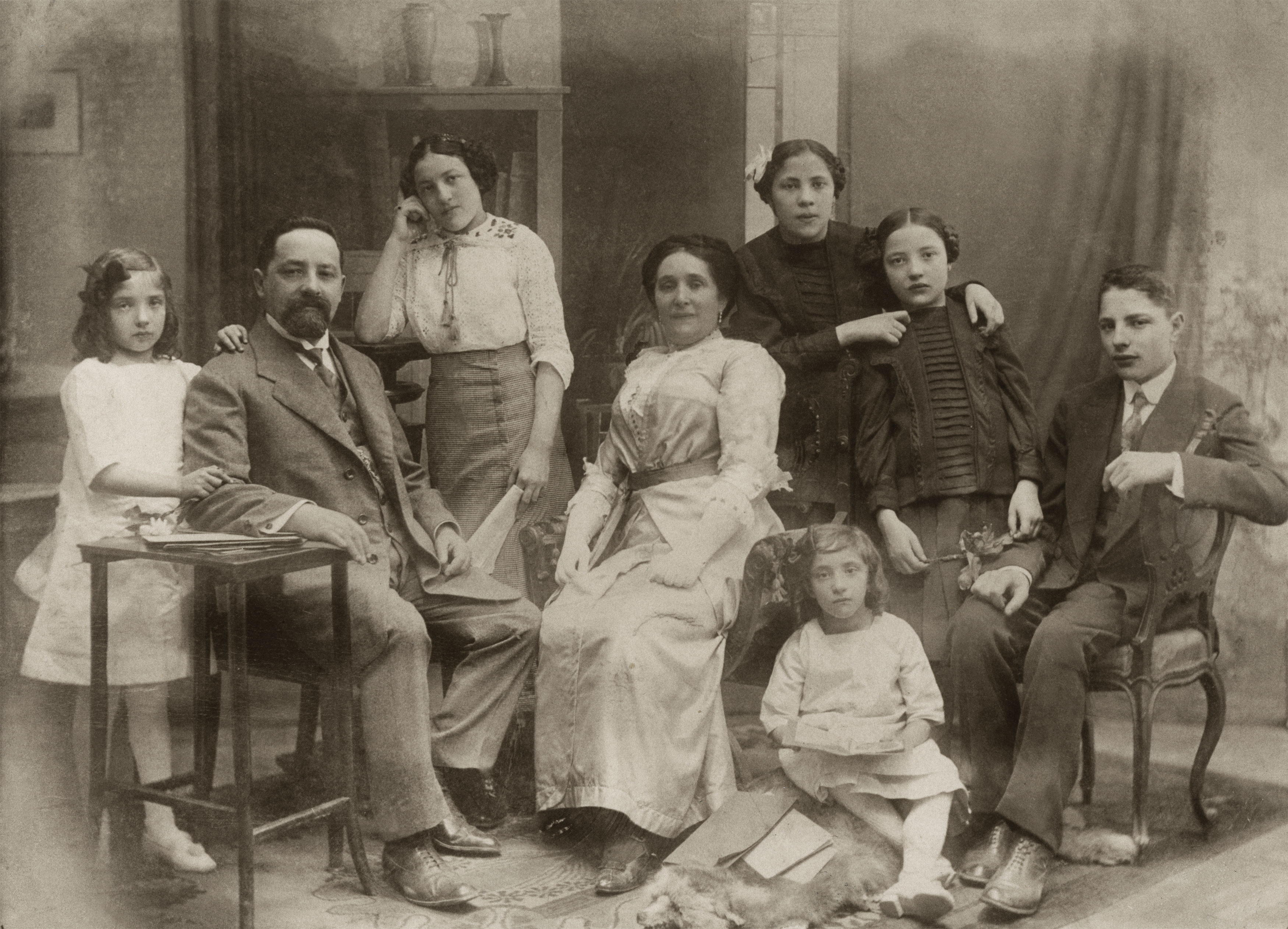
© Private property of the Rinat family
Jo Reiner’s sister Renée (fourth from right, standing) was the only family member to survive the Holocaust.
All of his other sisters were murdered in the Belzec extermination camp in 1942: Tusia (left), Luisa (third from left), Cesia (third from right, seated) and Rozia (second from right, standing).
Jo Reiner was murdered on 7 February 1945 in Hollandscheveld when the Nazis discovered the family’s hiding place.
Jo Reiner’s stepmother, Rachel, had already died in 1930, and his father, Ephraim, died in 1941.
Were there any survivors in Ab’s mother’s family?
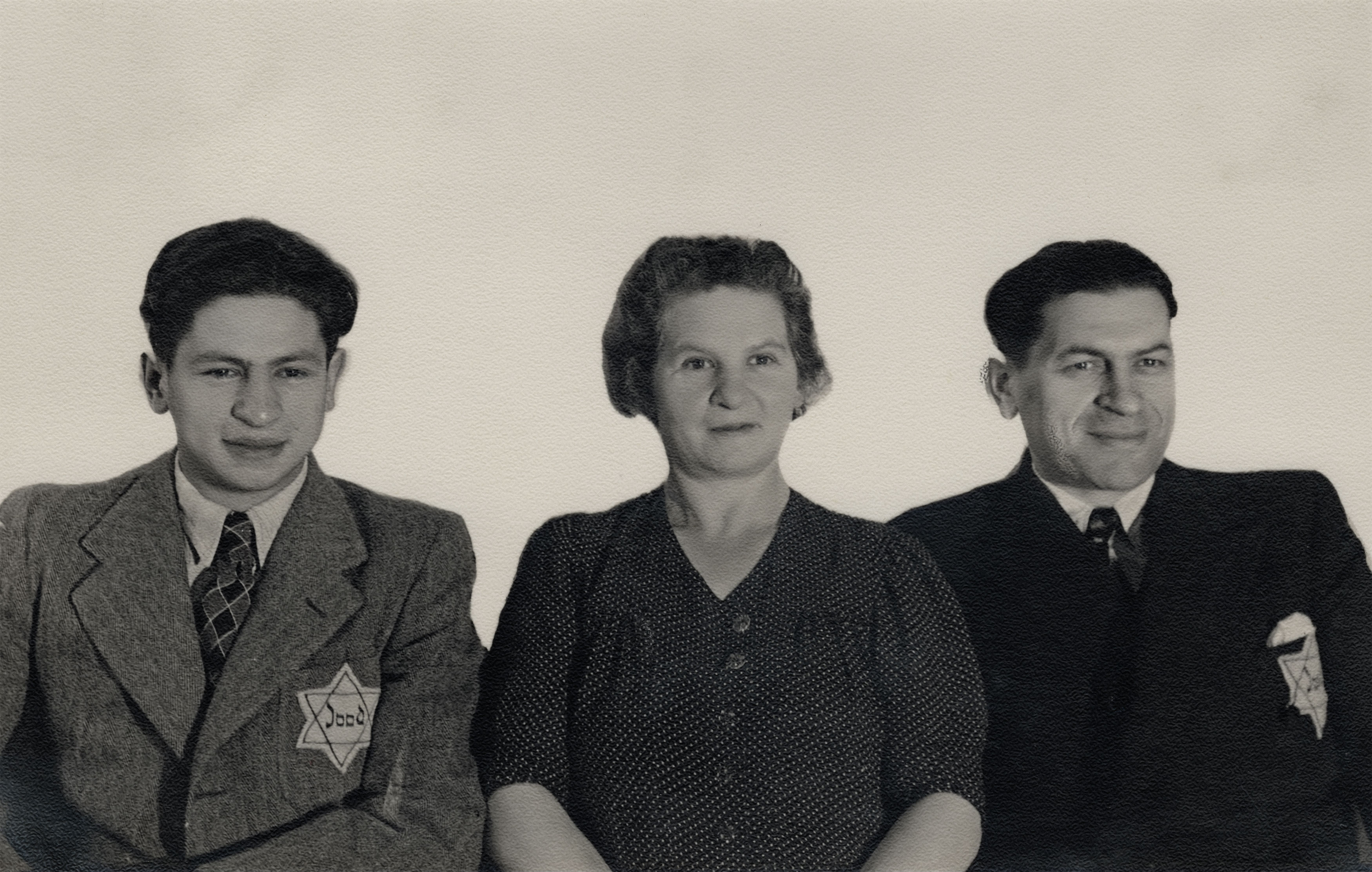
Ab’s mother, Lou, and his cousin, Sol, were the only survivors in the Goldberg family. Lou’s four sisters, including Sol’s mother, Eva, and her brother were murdered in the Holocaust.
© Private property of the Rinat family
Ab’s Aunt Gusti, and her husband, Czarny Cohn, were deported from Westerbork to the Sobibor extermination camp in the summer of 1943 and murdered there.
Their son, Arthur Cohn, was arrested on the street during a raid in Amsterdam and interned in Camp Vught in January 1943. In November 1943, he was transferred to Westerbork and deported from there to the Auschwitz extermination camp, where he died on 31 January 1944.
How did Ab commemorate his father, Jo, and his aunts?
Ab missed his father and aunts terribly and could see that his mother was suffering greatly from the loss of her husband, her sisters Eva and Gusti, and her siblings in Krakow.
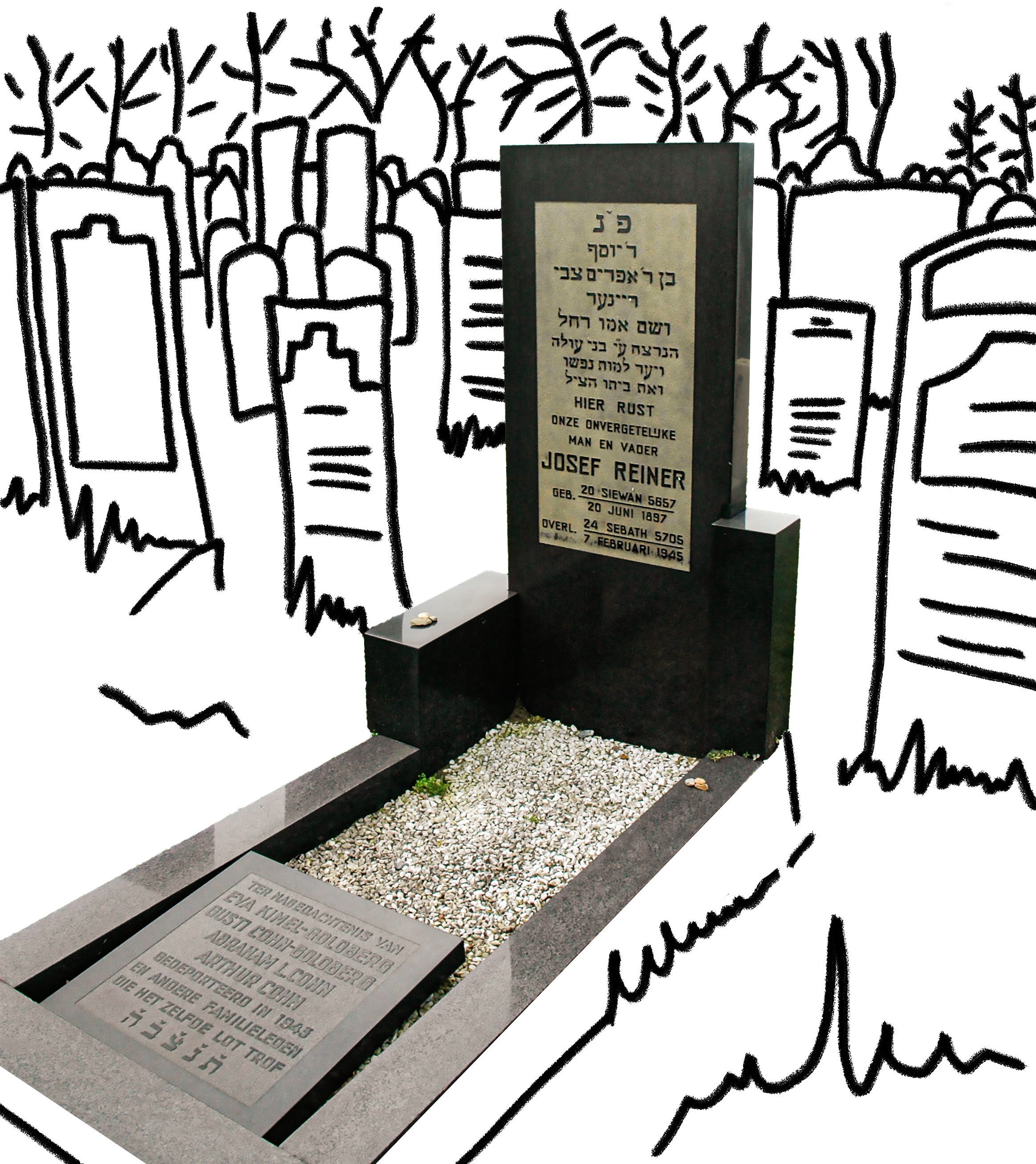
© Private property of the Rinat family
Transcription
Deported in 1943 with other family members who suffered the same fate.
May their souls be bound up in the bond of eternal life.
On Jo Reiner’s grave in the Jewish cemetery in Muiderberg lies a memorial stone for Lou Reiner-Goldberg’s family members who were deported from the Netherlands.
Her sisters Eva and Gusti, Gusti’s husband Abraham, known as Czarny, and their son Arthur Cohn are named there.
Aunt Eva was missed. I missed her. I longed for the pleasant and comforting presence she brought to the house. Weiter
I felt like I owed a debt to her that I could never repay. For her kindness. Her help. She was like a second mother to me. She and Mom were very close and got along very well. Now Mother was in charge of everything, and we had to help her. A mother who lost not only her husband and close sister, but also four other sisters and a brother without our knowing their exact fate.
Only one brother-in-law survived the war, Pineck, the husband of her younger sister, Erna. He contacted us after the war from Paris, while on a stopover on his way to New York. Mother and we three boys, were the only family he had left. She went to visit him in the United States in the early 1960s. At his death, Pineck left the three of us his humble possessions.
For my father, Jo Reiner, I now want to say the brief eulogy that I did not say at his funeral in Muiderberg. Weiter
“We will never forget what you did for us in routine days and times of danger. The terrible tragedy that happened was a rupture that turned our lives upside down and illuminated an aspect of your personality that I, as a boy, was unaware of. My feelings and love for you have deepened. We will continue our lives in the spirit of your actions. May your soul be bound up in the bond of eternal life.”
Every year, Marco and I mark the day our father, Jo Reiner, died on the 24th of Shevat. I go to the synagogue and say Kaddish. We call each other and Sol, too, of course. I light a memorial candle. Sol always calls on 7 February; the Gregorian date speaks to him more.
How did the Reiner family and Sol Kimel honour the people who had helped them?
Ab, Marco, their mother Lou, and their cousin Sol ensured that Jo and Jan van der Helm were declared “Righteous Among the Nations”. The Yad Vashem memorial in Israel awards this distinction to non-Jewish individuals who saved Jews during the Holocaust.

© Private property of the Rinat family
Transcription
Jan v. d. Helm.
Born 15 August 1911 – Died 7 February 1945.
John 3:35 A.
J.v.d. Helm-Moes
Arend and Albert.
On 12 December 1967, Jo and Jan van der Helm were awarded the Righteous Among the Nations Medal for hiding the Reiner family and Sol Kimel in their home.
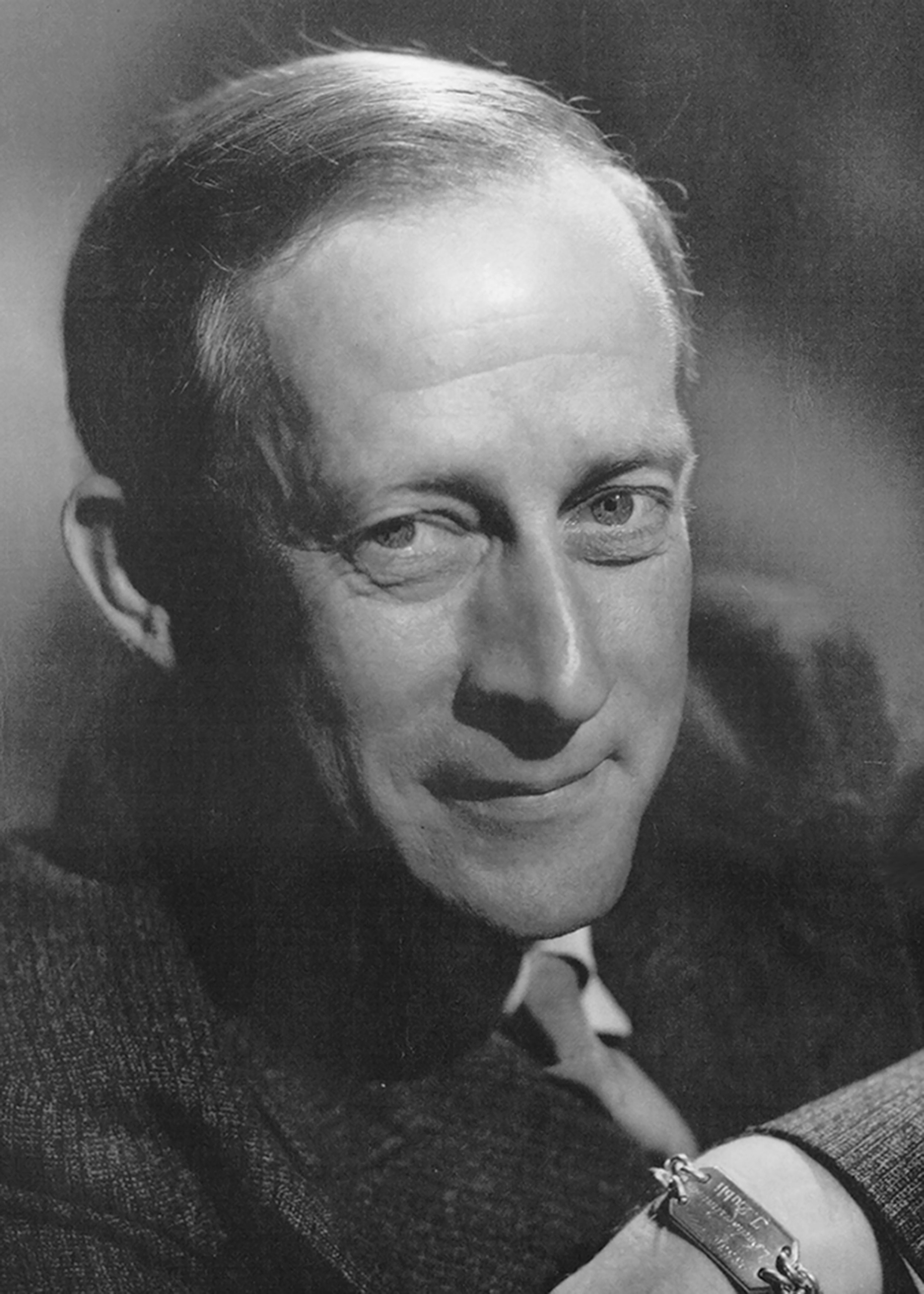
From the estate of Ab Rinat. Original source unknown
Since that night when our neighbour Dr Zubli saved us by declaring to the Gestapo that Marco was sick with scarlet fever, we have had no contact with him. Weiter
In fact, for years, we had been led to believe that he was not completely honest – an opportunist, a fan of the Nazis – and that the noble gesture that night had been a cover for his bad name.
It turned out that the opposite was true, and that the rumours about him being a collaborator had been an excellent alibi for his underground work.
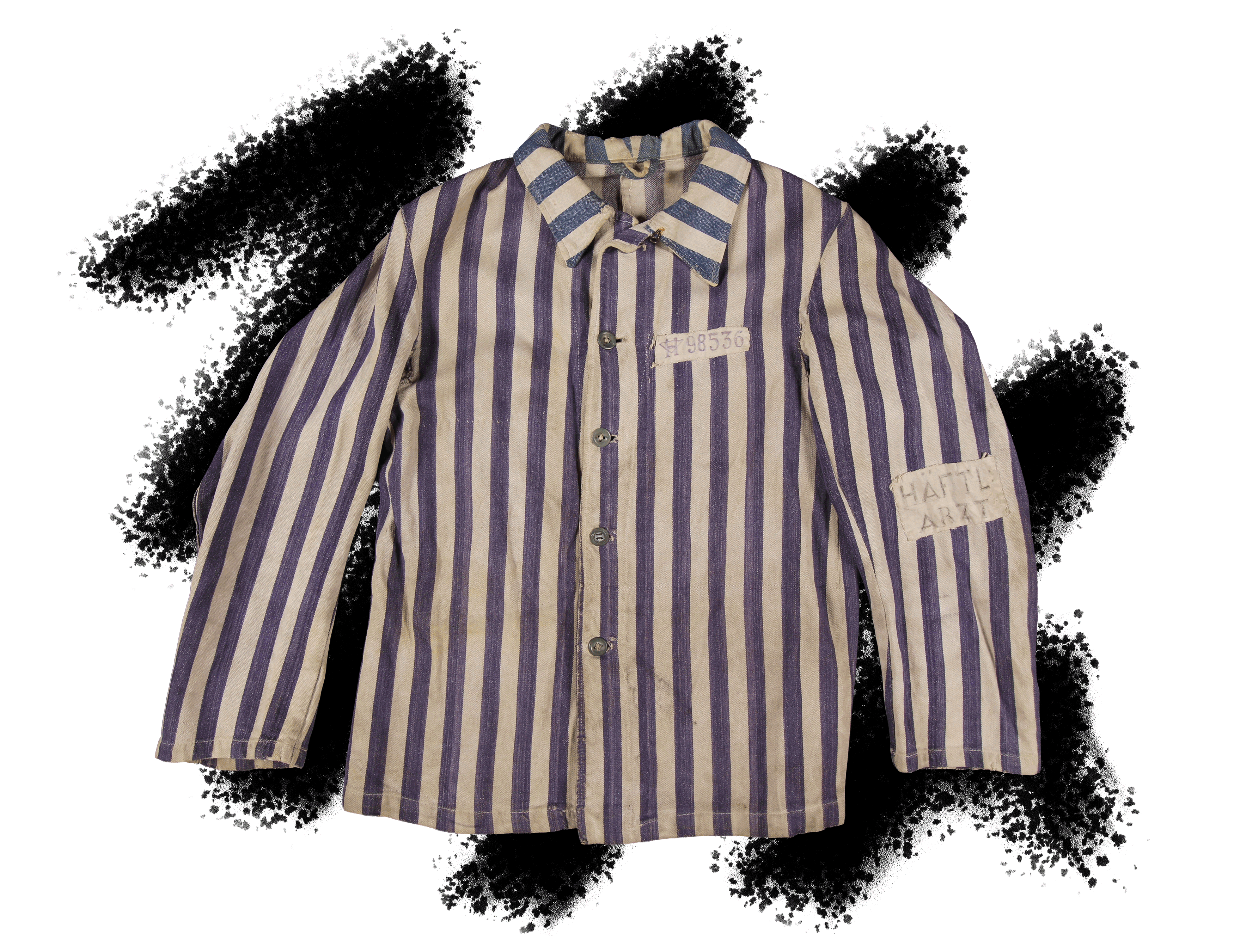
© USHMM, Gift of the Estate of Julius de Clercq Zubli, Accession Number: 2004.554.1
More than fifty years after the war, Sol, Marco, and I returned to the neighbourhood where we lived until we went into hiding. Weiter
We knocked on the door of our former upstairs neighbour on Daniël Willinkplein, called Victorieplein since 1946. The same neighbour was still there! And she remembered us! Stunning! But even more astonishing was what she told us about our former neighbour, Dr de Clercq Zubli: he continued to treat Jewish patients even after the Nazis forbade him from doing so. He also helped provide food stamps to those in hiding. In May 1944, while treating a wounded member of the underground, Gerrit van der Veen, he was captured by the Nazis along with his patient. Gerrit van der Veen was shot and killed and Dr Zubli was sent to the Sachsenhausen concentration camp.
After the war, he returned to Amsterdam and resumed his medical practice.
Dr Zubli’s Jewish patients gave him a trip to Israel on the occasion of his retirement. He died in 1967 before he could make the trip. I left the visit with our former neighbour full of admiration, but also sorrow for not having had any contact with Dr Zubli after the war.
I devoted myself vigorously to collecting the data required by Yad Vashem, and indeed, on 18 March 2001, Dr de Clercq Zubli was recognised as a Righteous Among the Nations.
How did Annelie commemorate her parents, who died in Bergen-Belsen and Tröbitz?
Annelie’s mother was buried in the Jewish Cemetery in Tröbitz in 1945. In 1949, her bones were transferred to the Jewish Cemetery of Muiderberg near Amsterdam. The inscription on the headstone also names her father, who died in the Bergen-Belsen concentration camp.

© Private property of the Tal family
Transcription
In memory. Here lies Elisabeth Levenbach-Goudeket
Died in Tröbitz
3 Siewan 5705
15 May 1945
Wife of Adolf Levenbach
Died in Bergen-Belsen
17 Adar 5705
3 March 1945
May their souls be bound up in the bond of eternal life.
At the age of seventy, Annelie began writing her memoirs – stories about her parents, her family, her wartime memories, and everyday life. These stories were later collected into a book that became a review of her life and a memorial to her parents.
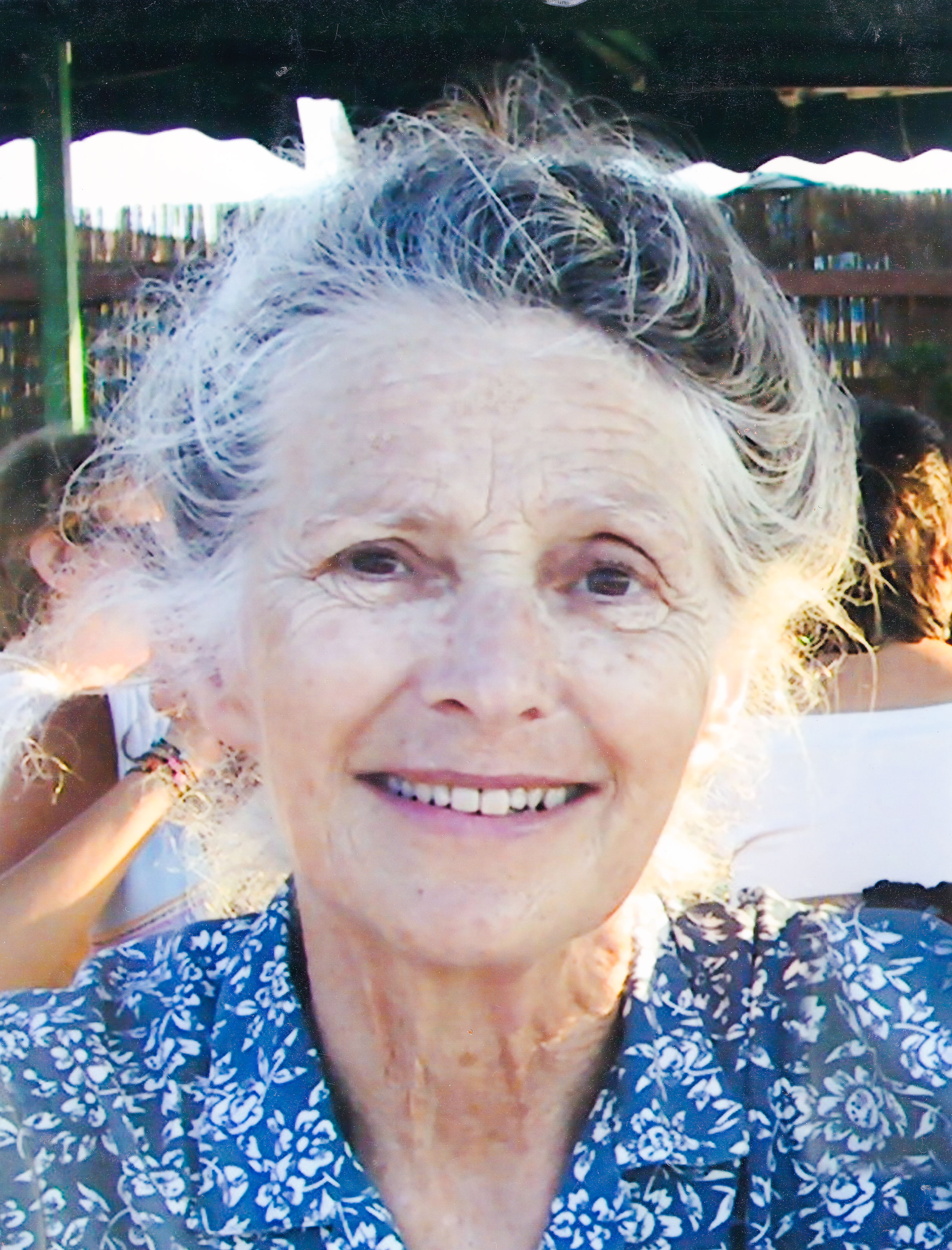
© Private property of the Tal family
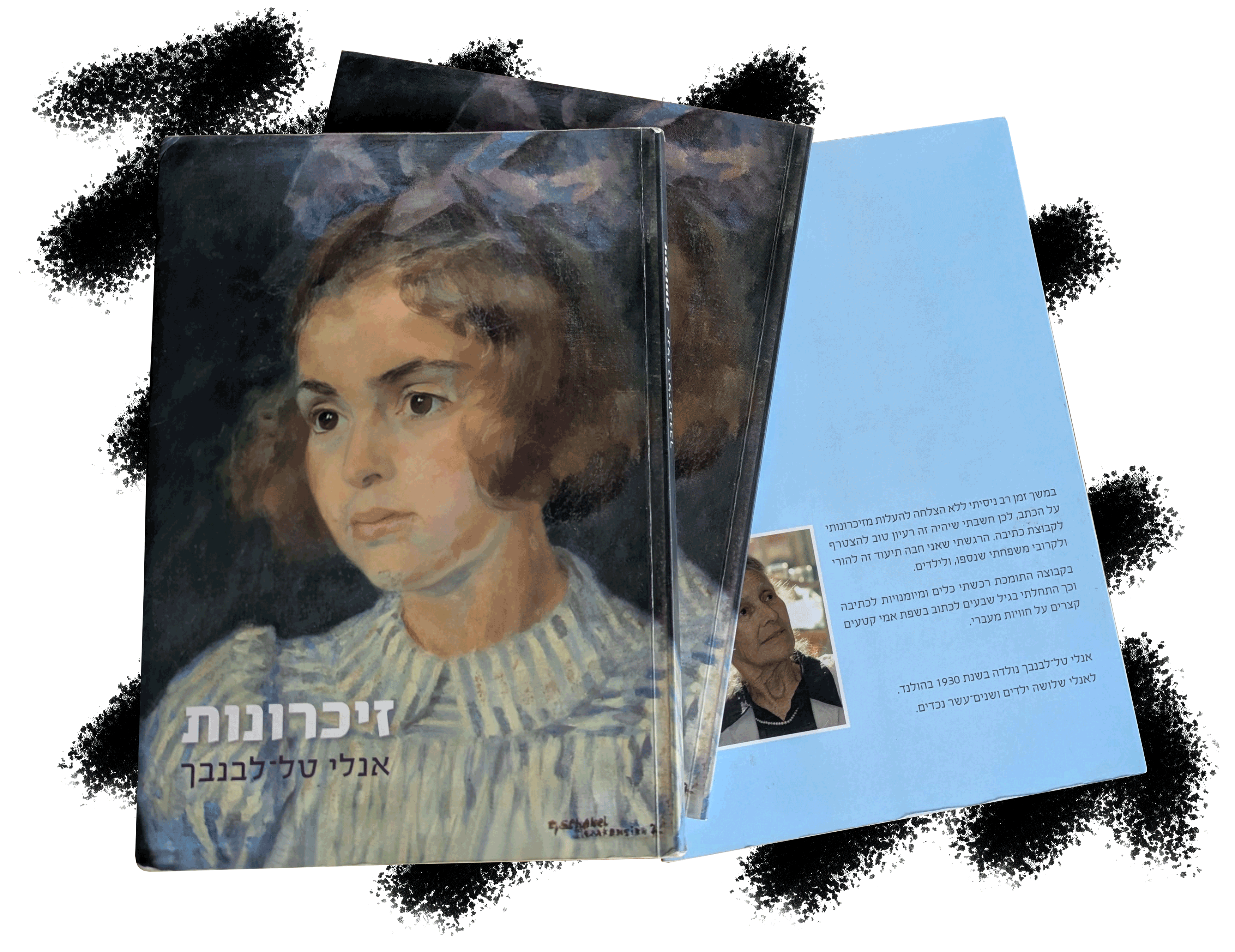
© Private property of the Tal family
When did Chanan and No’omi visit their father’s grave for the first time after 1945?
Chanan and No’omi travelled to Tröbitz for the first time in 1992, three years after the fall of the Berlin Wall. They had visited Sander Tal’s grave on the railway line between Tröbitz and Falkenberg several times by 2015.
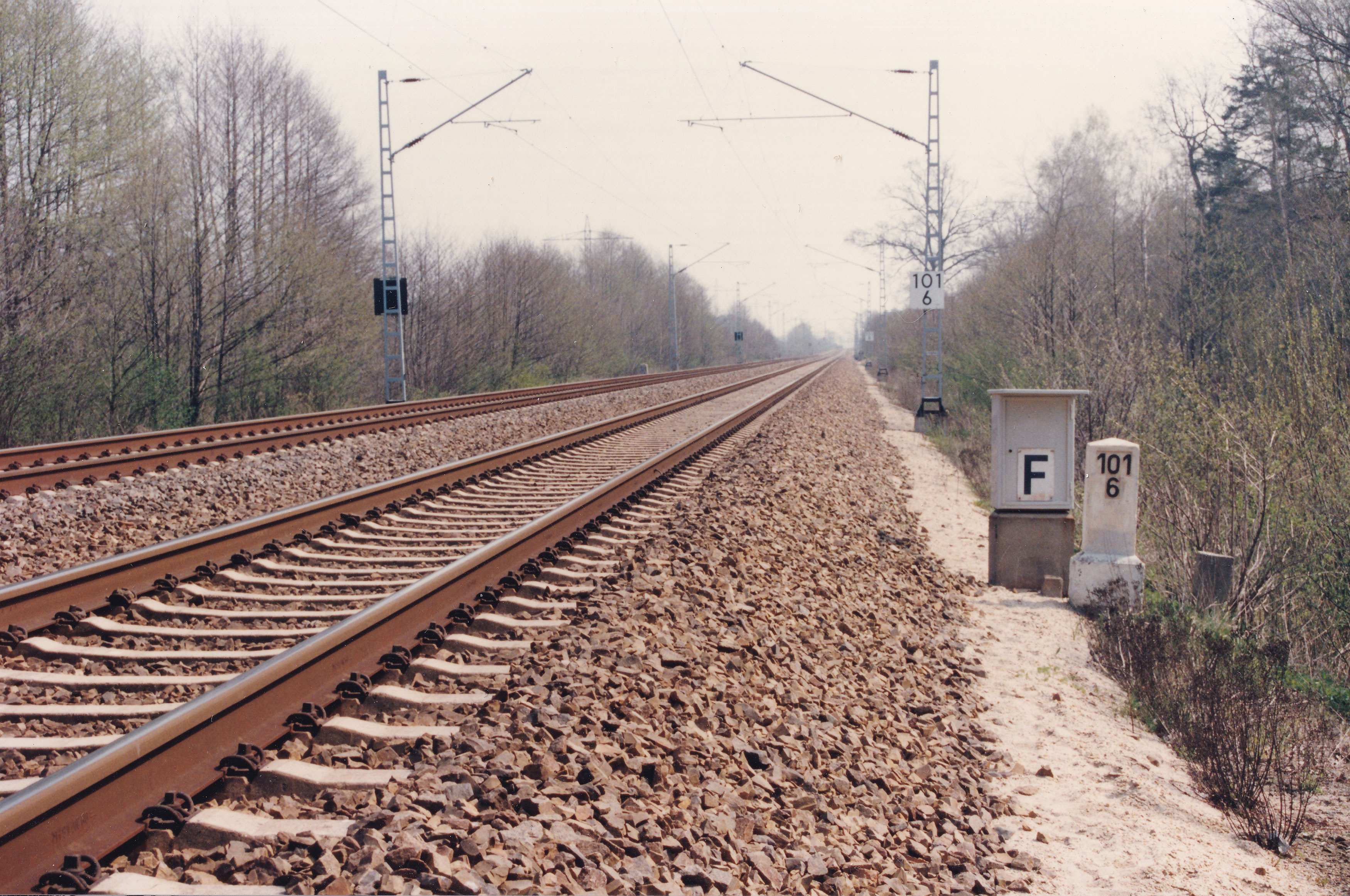
© Private property of the Tal family
In September 1992, after the fall of the Iron Curtain, Chanan and I took the opportunity to visit the place where our father was buried. Weiter
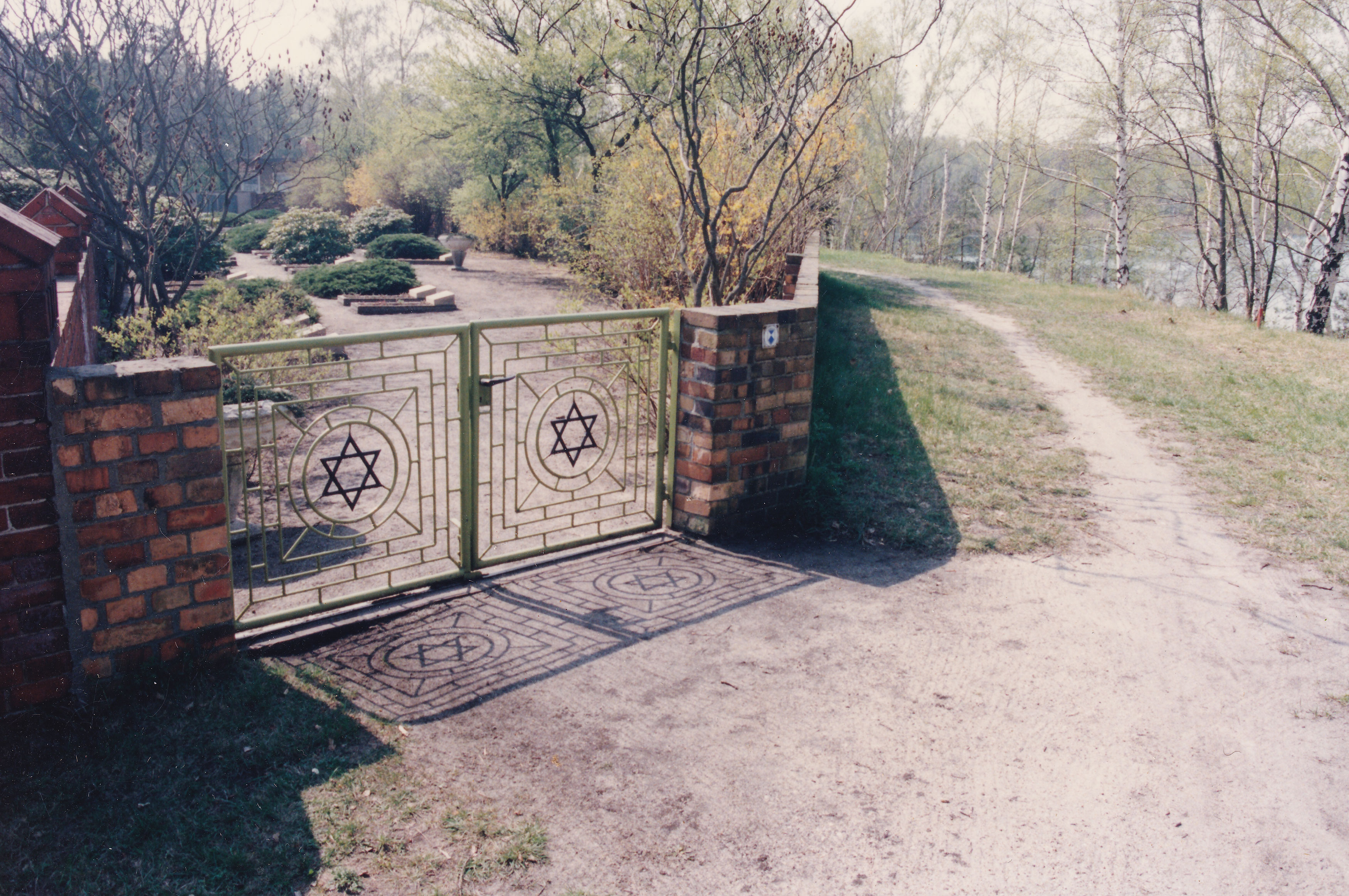
At Berlin airport, we rented a car and drove about 100 kilometres south. We parked by the railroad and began to walk along the tracks to the 101.6 km marker. On our left, at the edge of the forest, we found a large tombstone engraved with the 16 names of the dead buried there; among them was the name of our father.
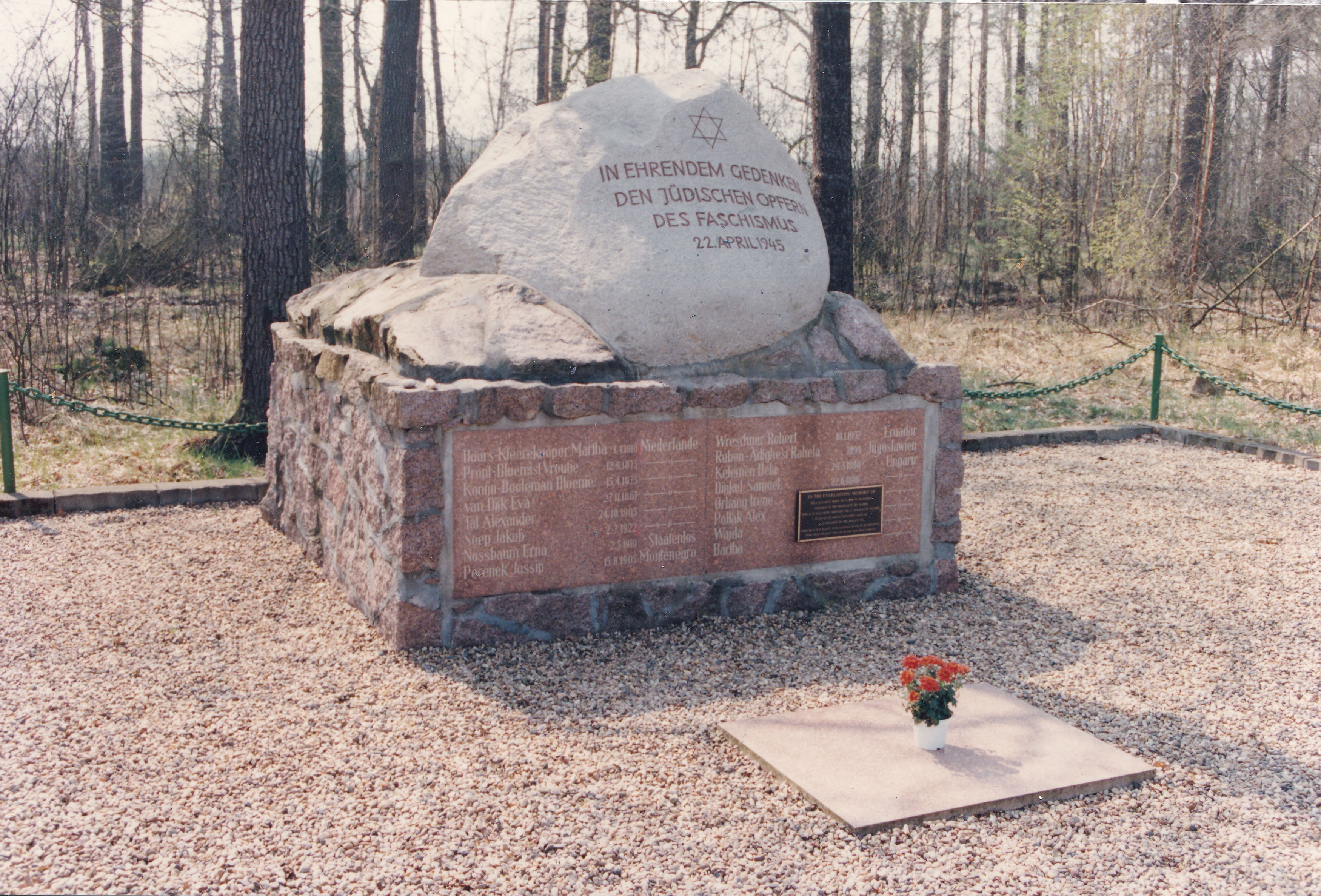
© Private property of the Tal family
There are several mass graves in the Tröbitz area where the dead from the Lost Train were buried. One is located at kilometre marker 101.6. The names of 16 dead are listed there, including Sander Tal. This memorial was initiated by Tom Keleman, who had been searching for the grave of his father, Bela Keleman. Bela Keleman died on 20 April 1945 and Sander Tal on 21 April 1945.
The municipality of Langennaundorf unveiled the memorial on 23 April 1989, exactly 44 years after the prisoners were freed from the train. Since then, a memorial service has been held there every year.
The person who helped find the mass grave where our father and Tom Keleman’s father are buried was a resident of Tröbitz, who said that as a child, he saw dead bodies being buried close to kilometre 101.6.
© Private property of the Tal family
In September 1992, Chanan and I first met Erika Arlt. It was a day after we visited our father’s burial site near Langennaundorf. Weiter
We spent the night napping in the car, which we had parked at the same place where the train had stopped almost 50 years ago. We settled into the car, having given up on finding accommodation in what two years earlier had been the GDR (East Germany).
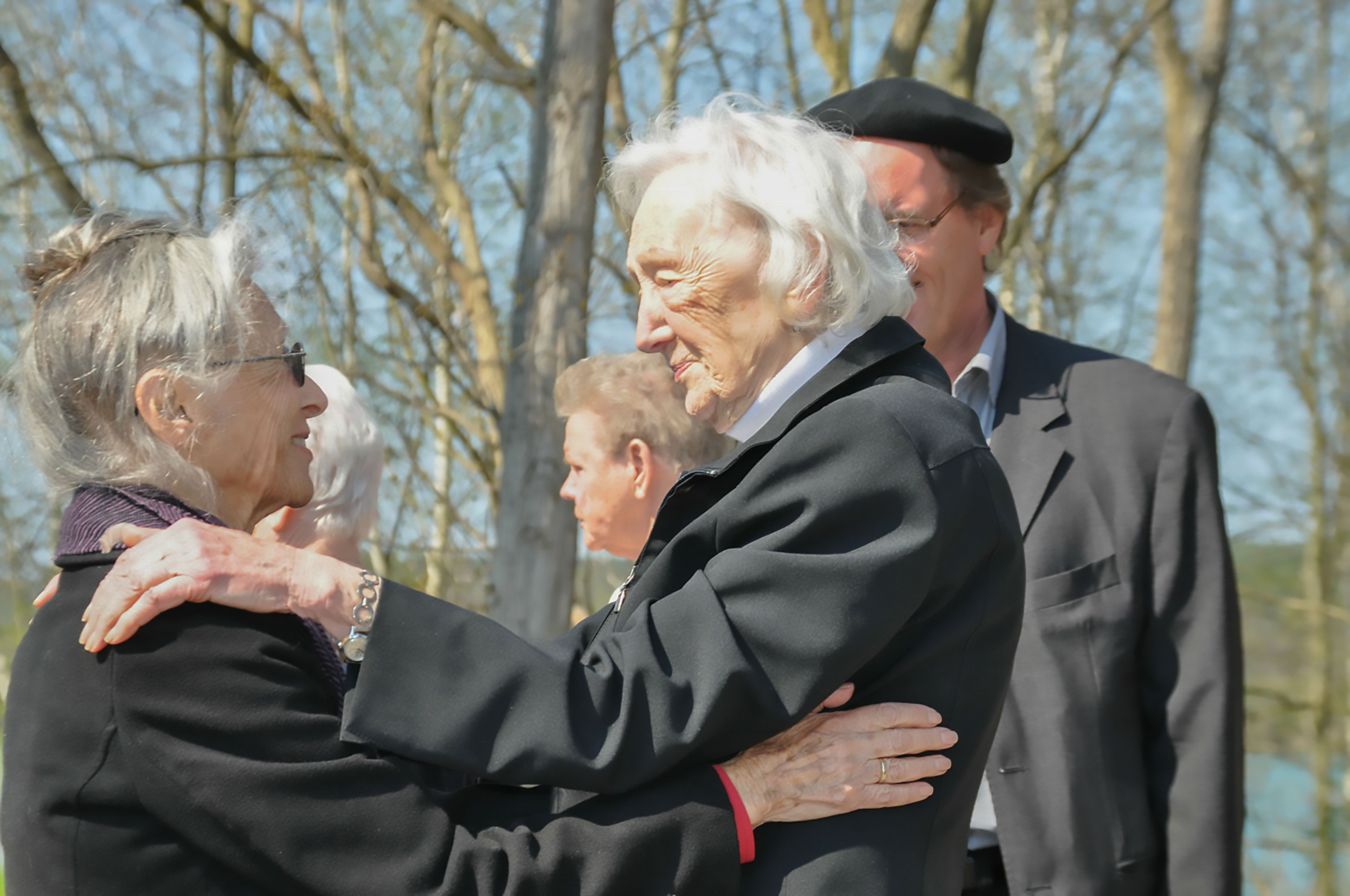
First thing in the morning, we went to the Jewish cemetery, which had been established in April 1945. Two women with rakes in their hands were busy maintaining the area. We asked them some questions, and they advised us to contact Mrs Arlt for answers. We turned towards her house and then it turned out that someone had already noticed us and informed her about the foreign visitors: I saw her approaching us on a bicycle.
© Gaudlitz / Bergen-Belsen Memorial, No.12981
We got along right away. Erika Arlt told us that she had always been anti-fascist, as was her husband, and that they had lived in Tröbitz since the 1950s. Weiter
Over the years, she, along with her husband, Richard, had cared for the various mass graves and maintained the Jewish cemetery. She wrote the story of the “Lost Train” in a booklet called “Never Forget”. After the area became accessible following reunification, and the Lost Train survivors and their families began visiting the site, Erika Arlt began conducting extensive correspondences – with anyone who could read German. She regularly reported on local annual memorial events and occasionally sent out interesting newspaper clippings and New Year’s greetings.
When we visited Tröbitz, she was always available for us. It was a pleasure to meet her. She formally addressed us as “Mr” and “Mrs” and of course we called her “Mrs Arlt”. We did not offer to change this as she was the oldest among us.
The last time I saw Erika Arlt, in April 2015, she called me ‘Noomi, Noomi!’ and gave me a little ‘butterfly’ she had knitted. She passed away in November of that year. I won’t forget her.
© Private property of the Tal and Rinat families
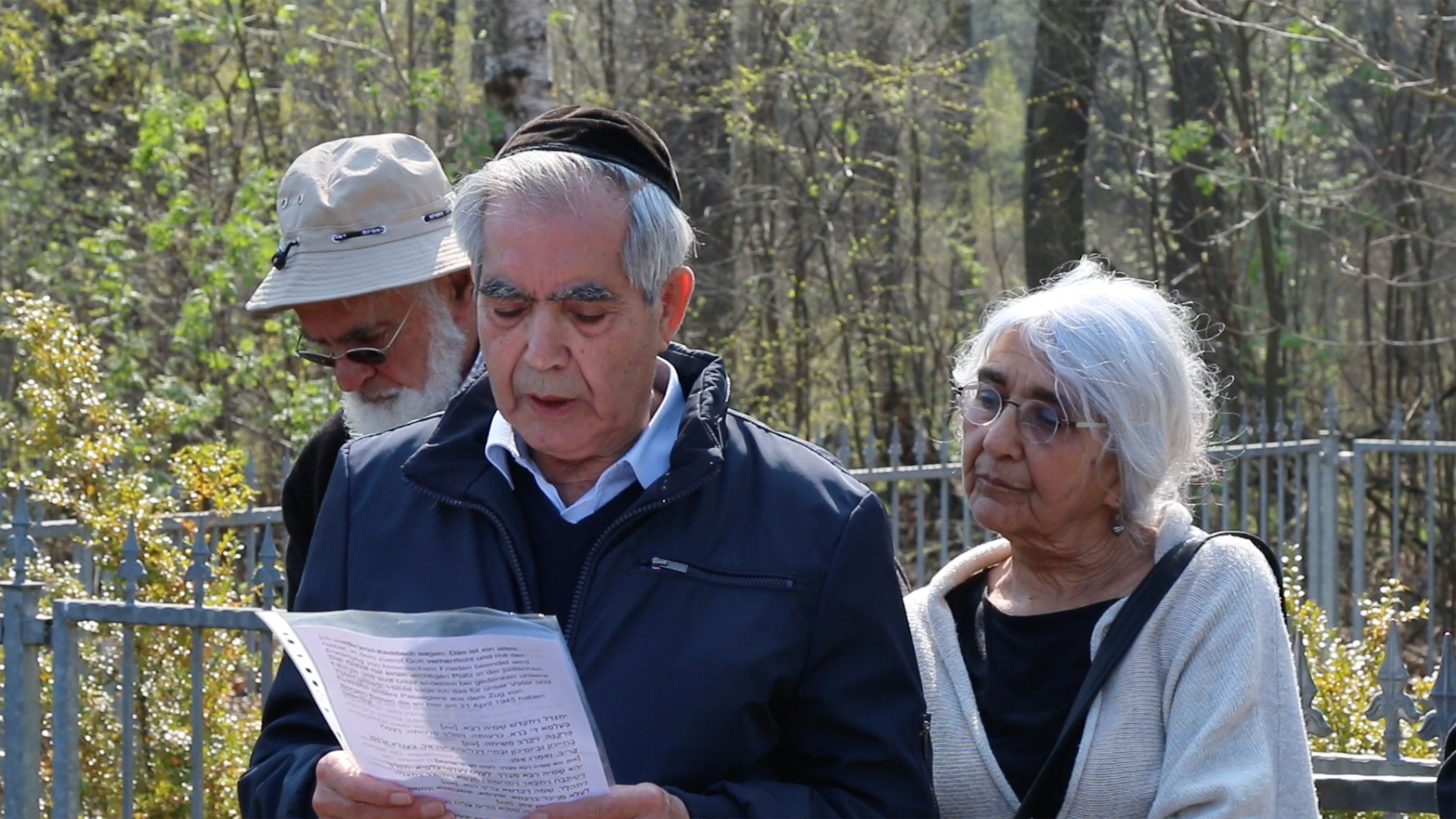
In April 2015, Chanan and No’omi visited with their families the mass grave where Sander Tal was buried. No’omi gave a speech before Chanan recited Kaddish, the Jewish prayer for the dead, there.
Emphasising the fact that we are all human beings – for better or for worse – is of the utmost importance to me. Weiter
The Holocaust did not take place on “another planet” and was not perpetrated by “devils”. We should all realise that every one of us is capable of moral decay: none of us is of a different calibre or superior to others. This is something we should always be aware of (which, unfortunately, we are not).
How did the Tal family commemorate Ruth in Bergen-Belsen?
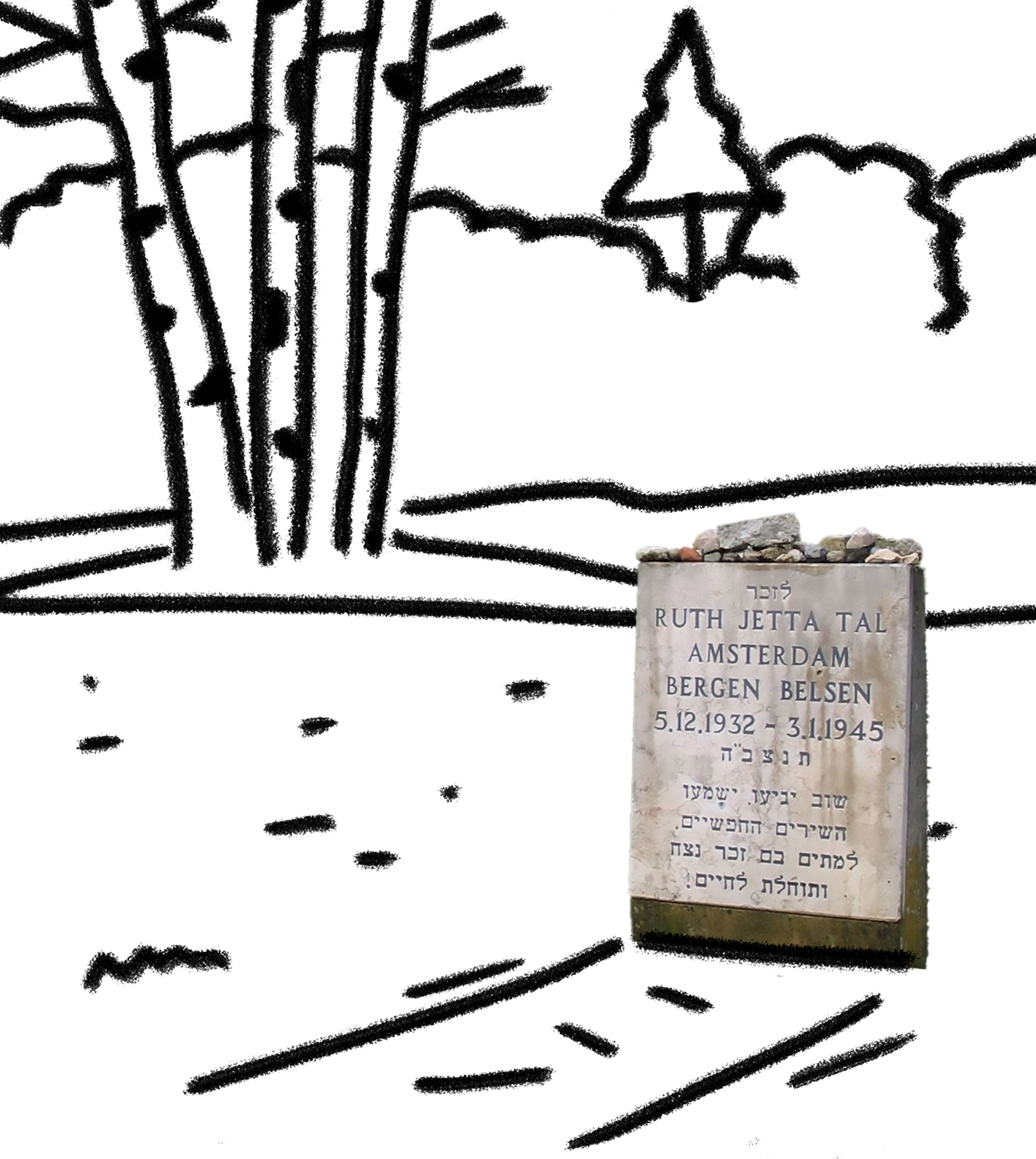
In 1994, fifty years after Ruth’s death, Chanan and No’omi erected a memorial stone in memory of their sister Ruth at the Bergen-Belsen Memorial site.
© Private property of the Tal and Rinat families
Transcription
Amsterdam
Bergen-Belsen
5 December 1932 – 3 January 1945
We chose to place the stone on the site of barrack 21. Weiter
The following words are engraved on the stone:
“They will come again,
Will be heard again.
The free songs,
Carry an eternal memory for the dead.
And hopeful expectation for the living.”
(Russian song translated by Rachel)
These words are, of course, also in memory of our father.
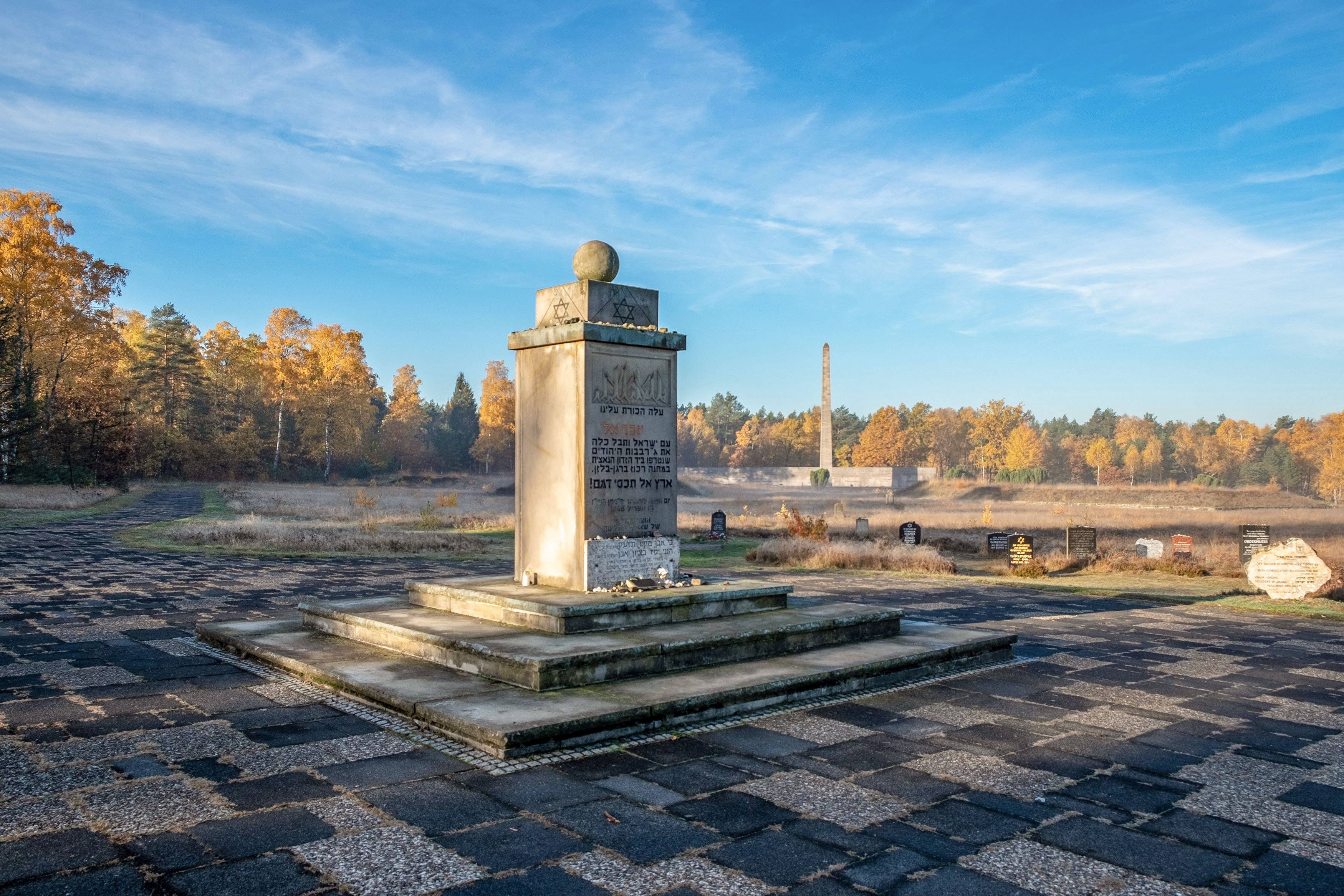
© Martin Bein / Bergen-Belsen Memorial
Hundreds of such memorials exist on the grounds of the Bergen-Belsen Memorial, in the area dedicated to those who died in the concentration camp.
More are added each year.
But the Bergen-Belsen Memorial is hundreds or thousands of kilometres away from where the persecuted and murdered last lived in freedom. Commemorative markers such as Stolpersteine (stumbling stones) or memorial plaques have been created to ensure that they are not forgotten in the towns and villages where they had lived.
What reminds us of the Tal and Reiner families in Amsterdam today?
The Tal and Rinat families travelled to Amsterdam in September 2025 to lay several stumbling stones: six in front of the house where the Reiner family had lived and seven in front of the house where the Tal family had lived. No’omi gave a speech there.
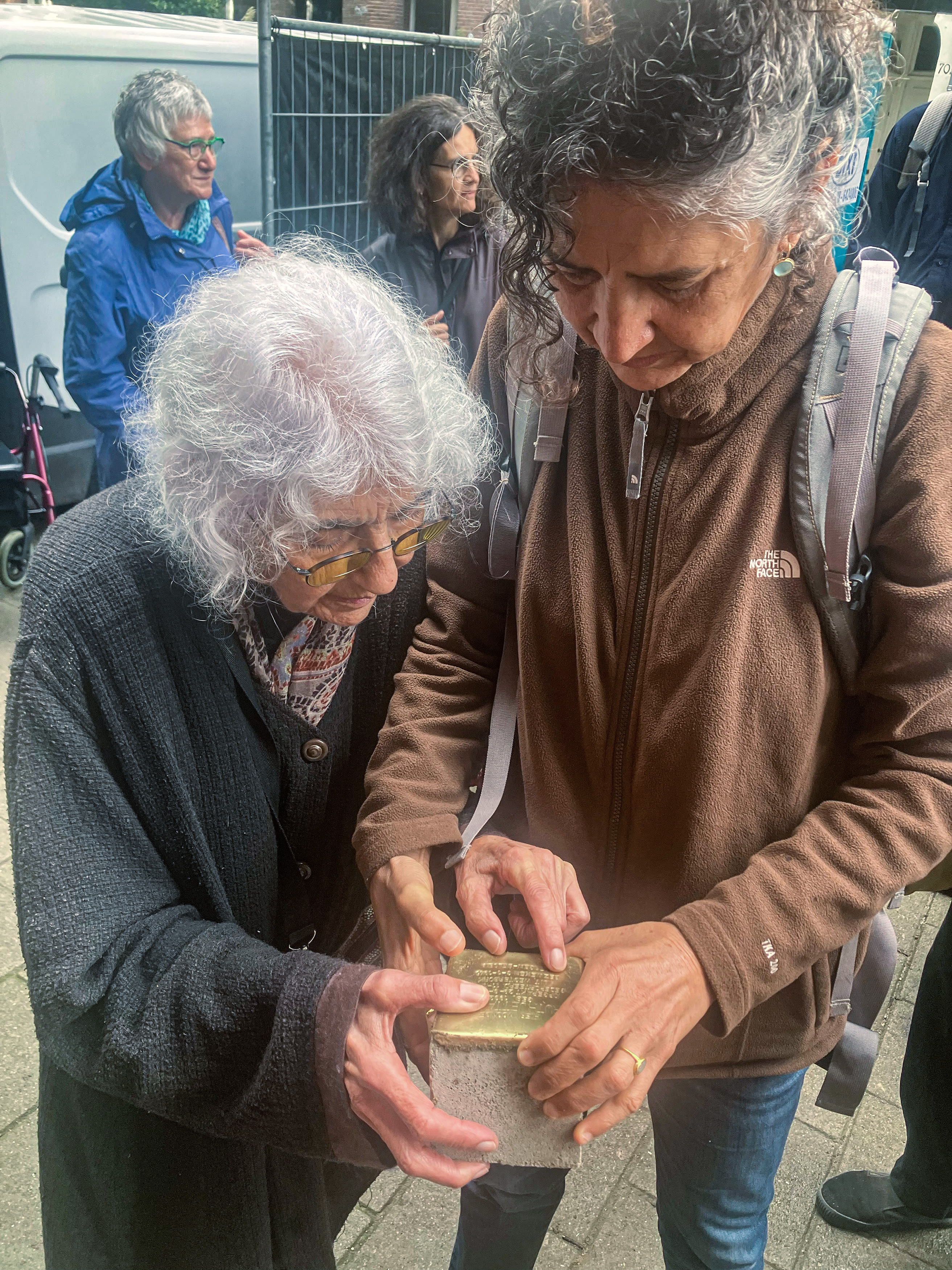
© Private property of the Tal and Rinat families
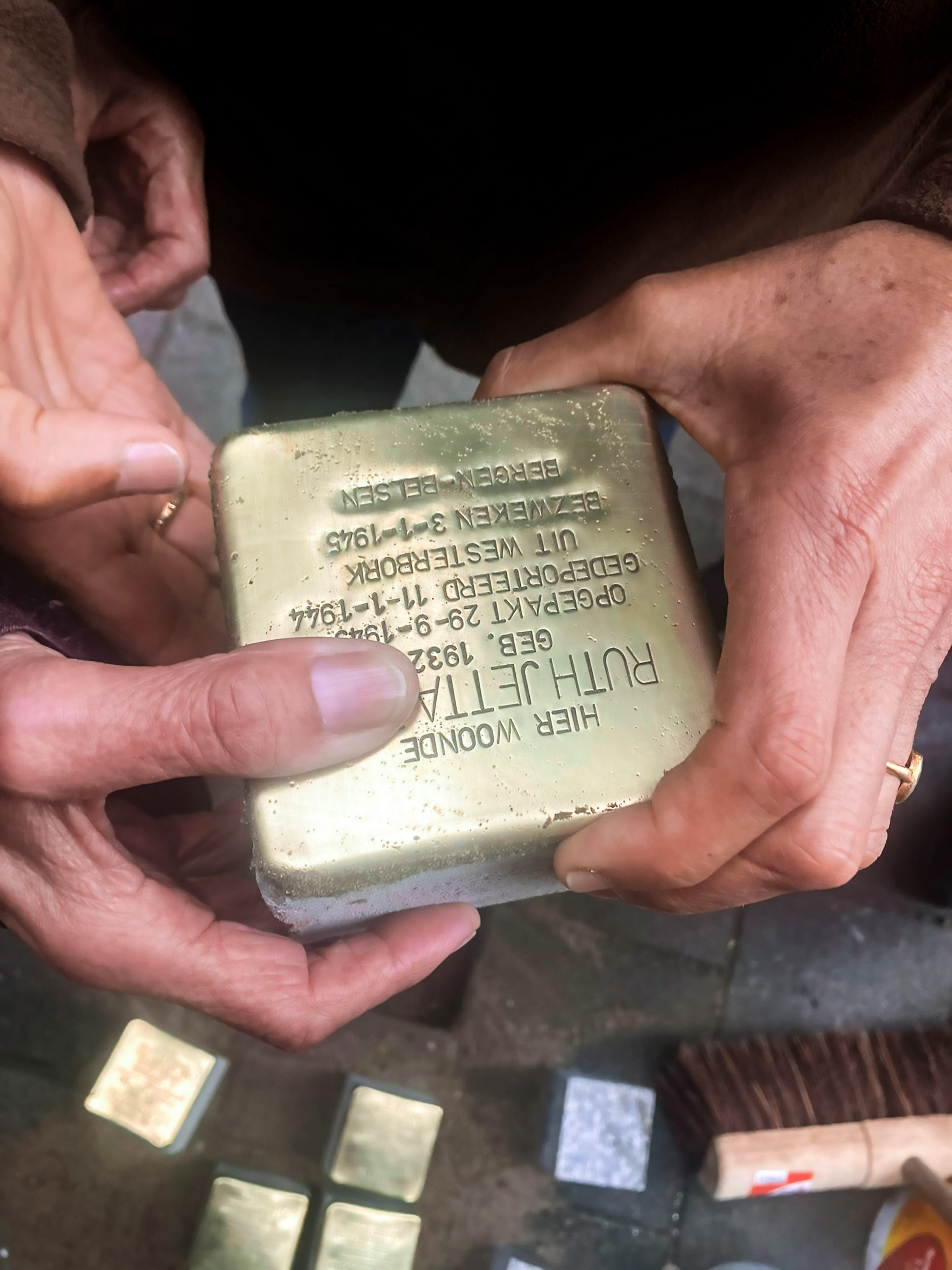
© Private property of the Tal and Rinat families
Transcription
Born in 1932
Arrested on 29 September 1943
Deported on 11 January 1944 from Westerbork
Died on 3 January 1945 in Bergen-Belsen
We had stood here on the day before Rosh Hashana 82 years ago. Weiter
We were seven: Oma Netta, who had come to celebrate the holiday with us and Father Sander, Mother Fre, Marion, Chanan, Ruth and me, No’omi.
We were standing here, after having been arrested by German soldiers and Dutch policemen who had suddenly appeared at our apartment announcing that we were to be transported to the Westerbork transit camp.
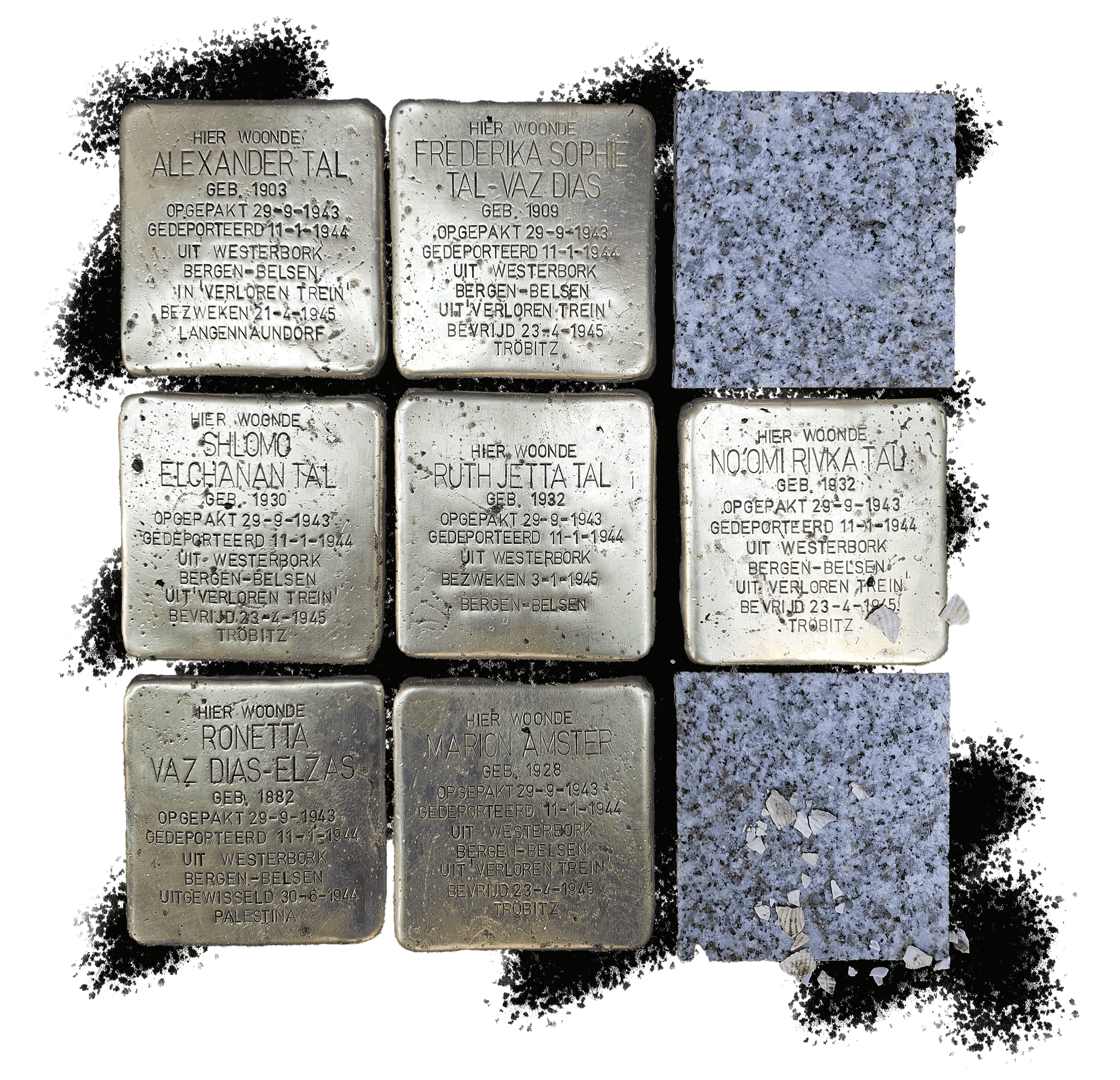
© Private property of the Tal and Rinat families
We came back here in June 1945, after almost two years, without Father and without my very best friend, my twin sister Ruth. Weiter
We had to restart life, without Father and without Ruth. We knew our stay in Holland was only temporary: Marion would join her father in the US, and Chanan and I would eventually move to the future Jewish State. There, we felt certain that the injustices of the past would not be repeated: there would be no racism, no discrimination, no persecution. Not directed toward us and certainly not perpetrated by us.
We thought mankind had learned its lesson and that peace among the nations would prevail, but we soon awoke to the bitter reality that we were wrong. All around the world, terrible wars are continuously waged, and terrible suffering is inflicted on countless victims.
Is there a way out of this terrible situation? Can we still find a way towards peace?
History, like life’s experiences, should help us develop and teach us how to cope with the challenges we encounter.
That implies that, foremost, we must have the courage to see the facts as they are, without being blinded by prejudices or diverted by the immense discomfort of the perpetrator’s guilt and that we must persevere and stand up against lawlessness.
In an effort to solve our ongoing conflict with the Palestinians or any conflict, the primary guiding principle should be our common humanity – rather than any specific ideology, however noble it may be.
It is the legacy of the Holocaust that urges us both to commemorate and act. Specifically, to act against dehumanisation, against silence, and in defence of the rules meant to protect life and human dignity in conflict.
What conclusions have No’omi and Ab, Annelie and Chanan drawn from their life experixence?
No’omi and Ab, Annelie and Chanan spent their life learning to understand the broader meaning of the Holocaust. They chose to be politically and socially active and campaigned for human rights, peace and against injustice.

© Private property of the Rinat family
You should be aware of what is happening, especially in your own country, so you never have to say ‘I didn’t know that’. Don’t close your eyes! As a member of your society you need to act when you see injustice.
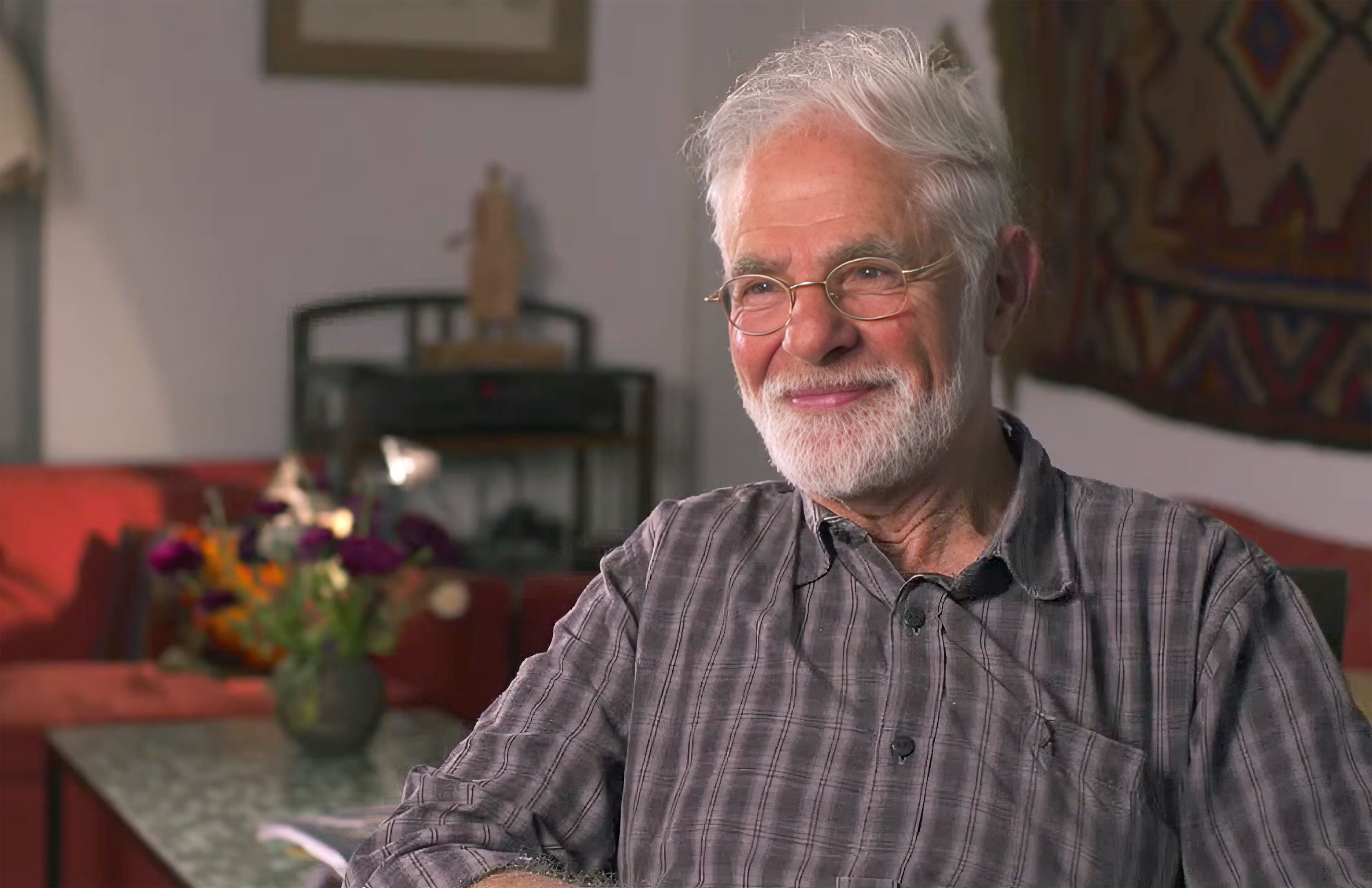
© Private property of the Rinat family
I have been inspired all my life by our rescuers, who did not let their fears outweigh their commitment to others, acting out of a strong inner conviction: ‘You can’t leave people in distress without help’.
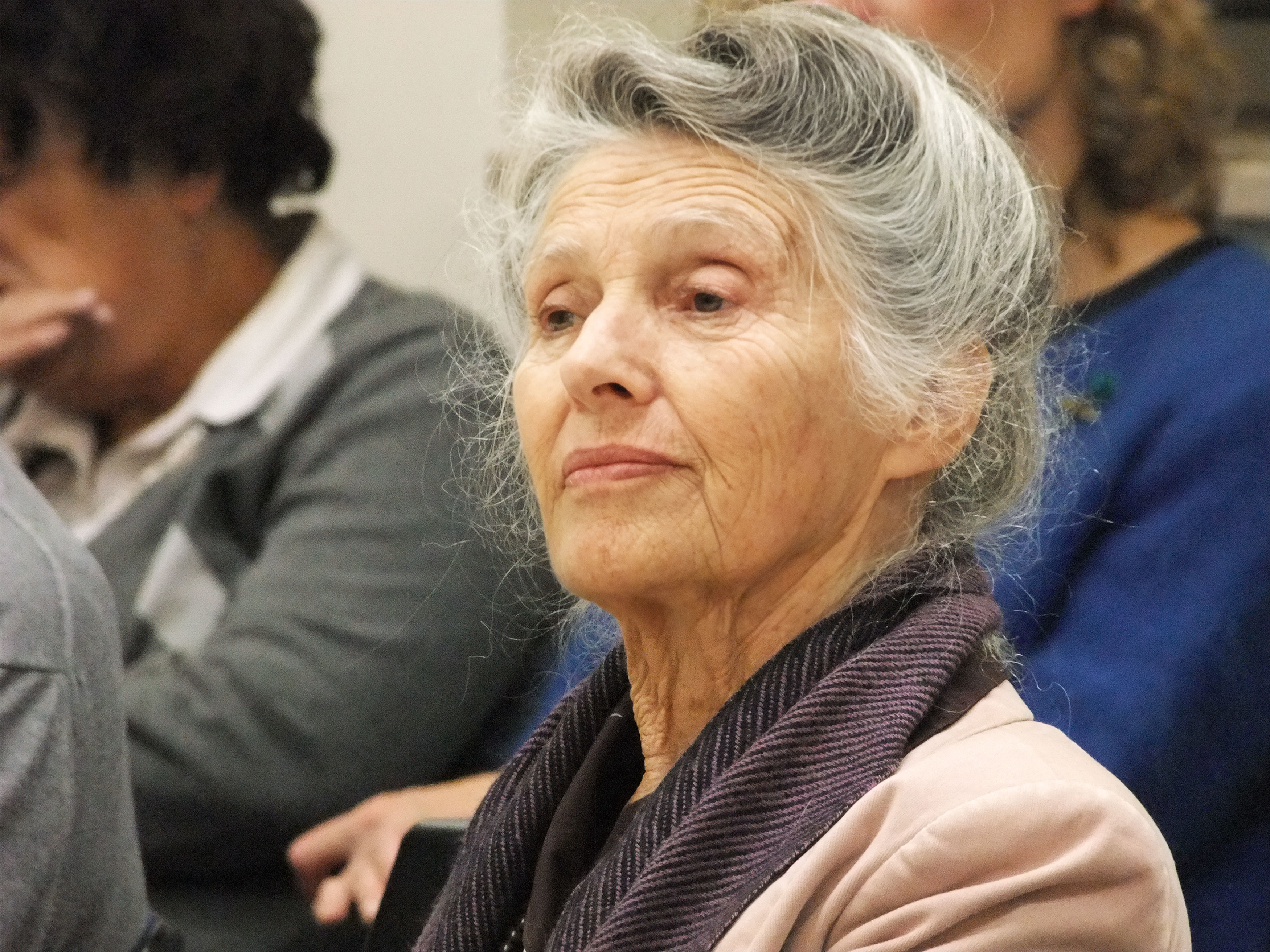
© Private property of the Tal family
We were saved because we were fortunate, we knew people, we had a certificate... One should always remember this and support people who are less fortunate.

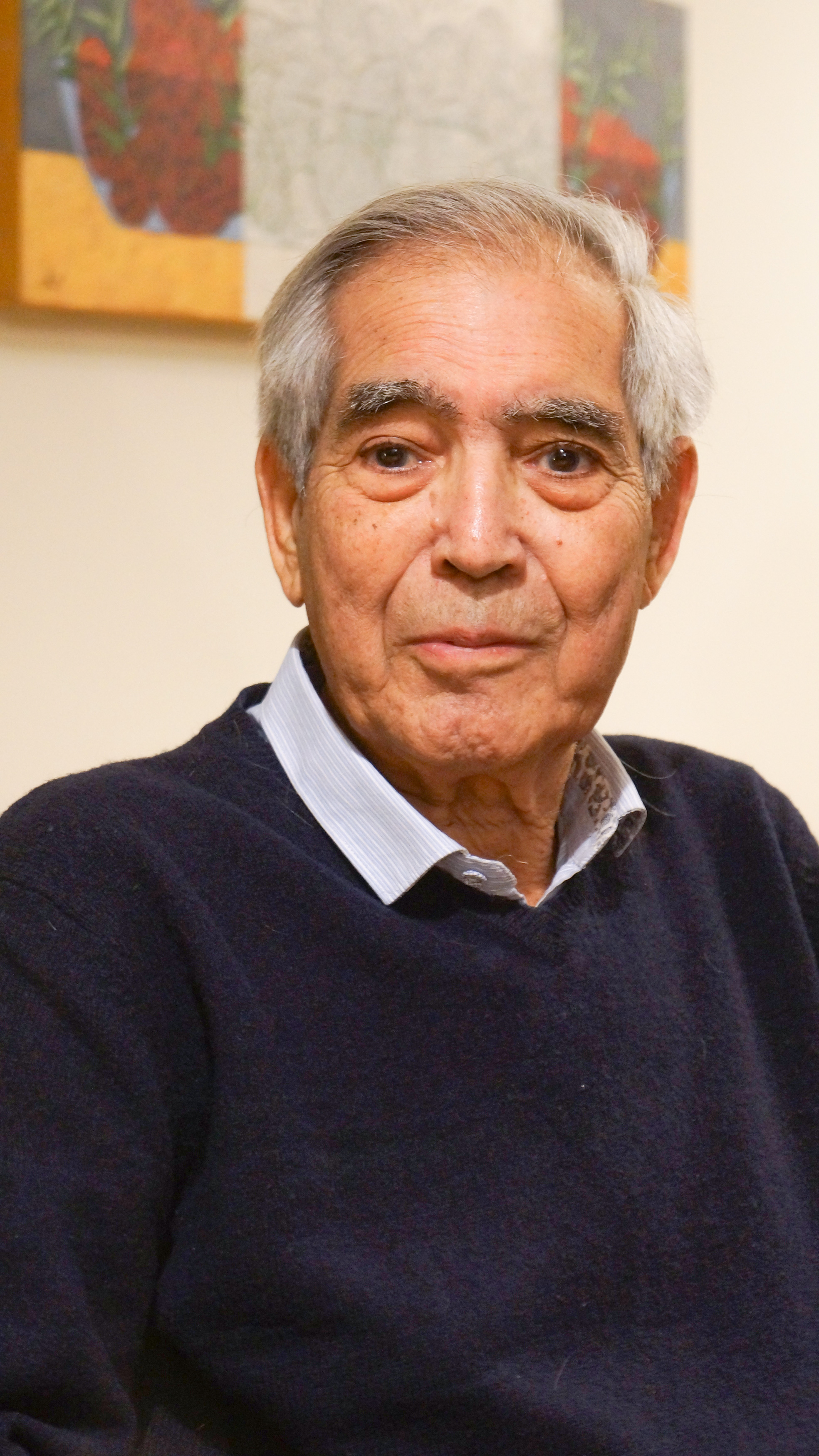
© Private property of the Tal family
We, who have experienced discrimination and racism in the most extreme way, need to protect human rights and respect others, even if they are foreign and even if they are an adversary.

Thank you for giving these questions some thought.
And thank you for reading and sharing our story.